Titans' New Logo Leaks: Fan Reactions Mixed Amidst Major Rebrand
The Tennessee Titans franchise is at a pivotal crossroads, navigating a transformative period marked by significant changes on and off the field. After four consecutive losing seasons, including back-to-back 3-14 campaigns, the organization is clearly determined to wipe the slate clean and usher in a fresh era. This comprehensive overhaul includes a new head coach in Robert Saleh, a largely revamped coaching staff, impending player movement, and, perhaps most visibly, a complete brand refresh. At the epicenter of this visual transformation is the much-anticipated, and now leaked, Titans New Logo, which has ignited a flurry of debate and mixed reactions across the NFL landscape.
The Leak Heard Around the League: Unpacking the Fanatics Reveal
Rumors of a new Titans logo had been swirling for months, gaining traction with every whispered hint of a full rebrand. The speculation reached a fever pitch recently when, on a Friday evening, a single product listing on the official Fanatics website inadvertently offered the world its first glimpse. The listing, featuring a plush football adorned with the redesigned Titans emblem, was quickly pulled down. But in the age of instant digital dissemination, the damage – or perhaps, the intentional reveal – was already done. Screenshots and images of the purported Titans New Logo spread like wildfire, setting social media ablaze and making it one of the NFL's biggest talking points over the weekend.
Initial reactions to the standalone leaked logo were, to put it mildly, quite varied. Some fans described it as overly simplistic, even resembling something a child might sketch. Phrases like "average artistic abilities" were thrown around, suggesting a perceived lack of sophistication. However, a significant shift in perception occurred when artists and graphic designers began mocking up the logo on a helmet. Suddenly, the seemingly basic design "looks much, much cleaner," as one analyst put it. This transformation from a somewhat uninspiring standalone image to a much sharper, more cohesive helmet design highlights the critical role context plays in branding. It also speaks to the potential impact of the rebrand on the overall uniform aesthetic.
A crucial element of the rebrand that has garnered near-universal praise, even more so than the logo itself, is the rumored return of a specific color scheme. The consensus among fans and experts is that the Titans should revert to white helmets, which many believe were superior to the navy helmets introduced in 2019. Beyond the helmet color, the prospect of a prominent return of "Oilers blue" – the light blue hue reminiscent of the franchise's Houston Oilers roots – alongside more hints of red, is being heralded as a potential home run. This color combination of Oilers blue, red, and white is widely considered an "undefeated color way," making it "virtually impossible to mess up." If the franchise commits to this classic palette, the visual impact alone could be enough to reinvigorate the fanbase, regardless of the precise nuances of the new emblem. It's clear that the proposed color scheme for the Titans New Logo and accompanying uniforms holds immense sentimental and aesthetic value for many.
A Closer Look at the Design: Evolution or Revolution?
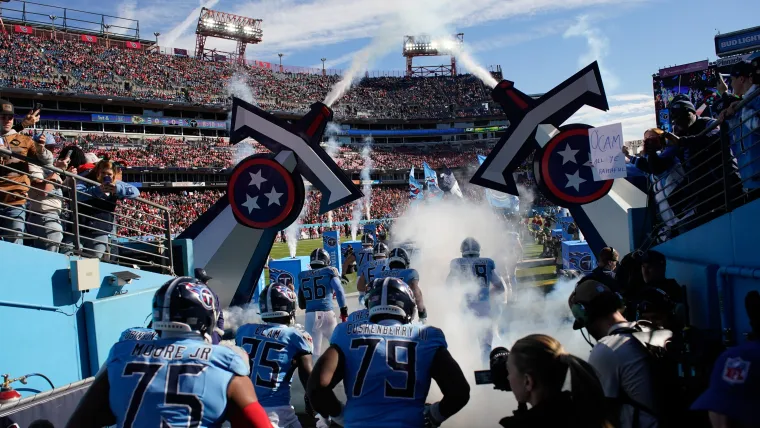
The leaked Titans New Logo features a distinct departure from its predecessor. Gone are the prominent flames and the more literal sword-T that defined the team's visual identity for decades. In their place is a design centered around a circle, encompassing three stars, and a more abstract, blade-like "T." This shift immediately positions the Titans within a broader trend seen across sports leagues: the move towards more minimalist and streamlined logos. Many teams are opting for simpler, cleaner designs that are arguably more versatile for digital platforms and merchandising.
For some long-time fans, the loss of the iconic flames and sword-T is a point of sadness. These elements represented a fierce, aggressive identity that resonated with the "Titans" moniker. They lament the perceived "conforming to the minimalist era," fearing that the team is sacrificing a unique, established identity for a more generic aesthetic. However, others view this as a necessary evolution. The three stars within the circle likely represent the three stars on the Tennessee state flag, firmly grounding the team's identity in its geographical home. The blade-like "T" offers a more sophisticated, perhaps sharper, interpretation of the sword, moving away from a literal depiction towards a symbolic representation of strength and precision.
The art of sports branding lies in striking a delicate balance between honoring tradition and embracing modern design sensibilities. While the former logo was instantly recognizable, its complexity could sometimes be a hindrance in modern applications. The new design, with its crisp lines and clear elements, might be interpreted as a more refined, contemporary emblem that still pays homage to the team's warrior spirit without being overly literal. It reflects a strategic decision to project an image of modern strength and identity, ensuring the Titans New Logo can stand the test of time and adapt to various media platforms effortlessly. For more insights on the potential impact of this color choice, you might find this article interesting: Titans' Leaked Logo: Fine, But Oilers Blue Signals a Home Run.
Not So New After All: The Logo's Hidden History
Perhaps the most astonishing revelation surrounding the leaked Titans New Logo is its surprising, decades-long history within the franchise itself. What many fans initially perceived as a brand-new creation has, in fact, been quietly living in plain sight for years. Sharp-eyed fans, ignited by the Fanatics leak, soon spotted the circular, three-star, blade-T design in various existing Titans spaces, including new Nissan Stadium renderings. This prompted a fascinating discovery: the logo had been featured on the floor of the team's headquarters lobby in MetroCenter since the franchise's inception in Nashville, dating back to August 1999.
Insiders from the team confirmed that this particular mark was present from the very beginning, though it was never considered an official, primary logo. Instead, it served as a secondary or auxiliary mark, used primarily when the complex fireball tail of the main logo proved difficult to duplicate or made centering issues problematic for various applications. It even appeared in other team features, such as the 22nd Element fan attendance program, which started in 2018. The team’s old lobby, along with that original floor, disappeared when a second large building was constructed on campus between 2020 and 2021, yet the logo's subtle legacy persisted.
The decision to elevate this once-secondary, flameless mark to a primary position is significant. It suggests a strategic pivot by the Titans to embrace a logo that is both historically connected to the franchise and aligned with modern branding principles of simplicity and versatility. This move could be interpreted as a nod to a forgotten piece of their own history, bringing it to the forefront as a symbol of continuity amidst a desire for a fresh start. It provides the team with a narrative of evolution, rather than a complete erasure of the past, making the Titans New Logo a surprising bridge between eras. For a deeper dive into this historical context, check out: The 'New' Titans Logo: An Old Mark Found in Plain Sight Since 1999.
The Bigger Picture: Beyond Just the Logo
It's crucial to understand that the leaked Titans New Logo is not an isolated event but rather a highly visible component of a far broader, comprehensive rebrand for the Tennessee Titans. The changes initiated by the franchise extend well beyond aesthetics, signaling a profound strategic shift aimed at transforming every facet of the organization. This rebrand began with the decisive overhaul of the coaching staff, bringing in Robert Saleh as the new head coach, who has since built largely his own staff in Nashville. This foundational change in leadership and strategic direction is expected to filter down to player movement, beginning significantly with free agency and the upcoming draft.
A new logo and uniform scheme serve as powerful visual markers for such a sweeping transformation. For a struggling franchise like the Titans, a successful rebrand can have a profound psychological impact. It signals a clean break from past disappointments, offering a tangible representation of a "fresh start" for players, staff, and most importantly, the fanbase. A revitalized brand can reignite enthusiasm, foster renewed loyalty, and create a sense of optimism that is essential for rebuilding success. For fans, new merchandise bearing the fresh logo and classic colorways can become a symbol of shared hope and a tangible way to express their support for the team's new direction.
Moreover, the rebrand positions the Titans for future commercial success and increased fan engagement. A clean, modern, and historically resonant logo, paired with a beloved color scheme, can boost merchandise sales, attract new fans, and enhance the team's overall marketability. This comprehensive approach, encompassing coaching, personnel, and branding, demonstrates the Titans' commitment to returning to competitive prominence. The Titans New Logo, therefore, is more than just a design change; it's a statement of intent, a visual promise of a rejuvenated future for a franchise eager to forge a new legacy.
The leaked Titans New Logo has certainly stirred the pot, generating passionate discussions and diverse opinions among fans and analysts alike. While the standalone design initially drew mixed reviews, its appearance on a helmet mock-up, coupled with the anticipated return of the beloved "Oilers blue" and white helmets, suggests a strong potential for overall fan acceptance. The fascinating revelation of the logo's long, quiet history within the organization adds layers of intrigue and tradition to what initially seemed like a completely new mark. Ultimately, this visual rebrand is a critical piece of a much larger puzzle, signifying the Titans' profound commitment to a fresh start, from the sidelines to the locker room, and now, to the very identity they project to the world. As the 2026 season approaches, all eyes will be on Nashville to see how this ambitious transformation unfolds.